
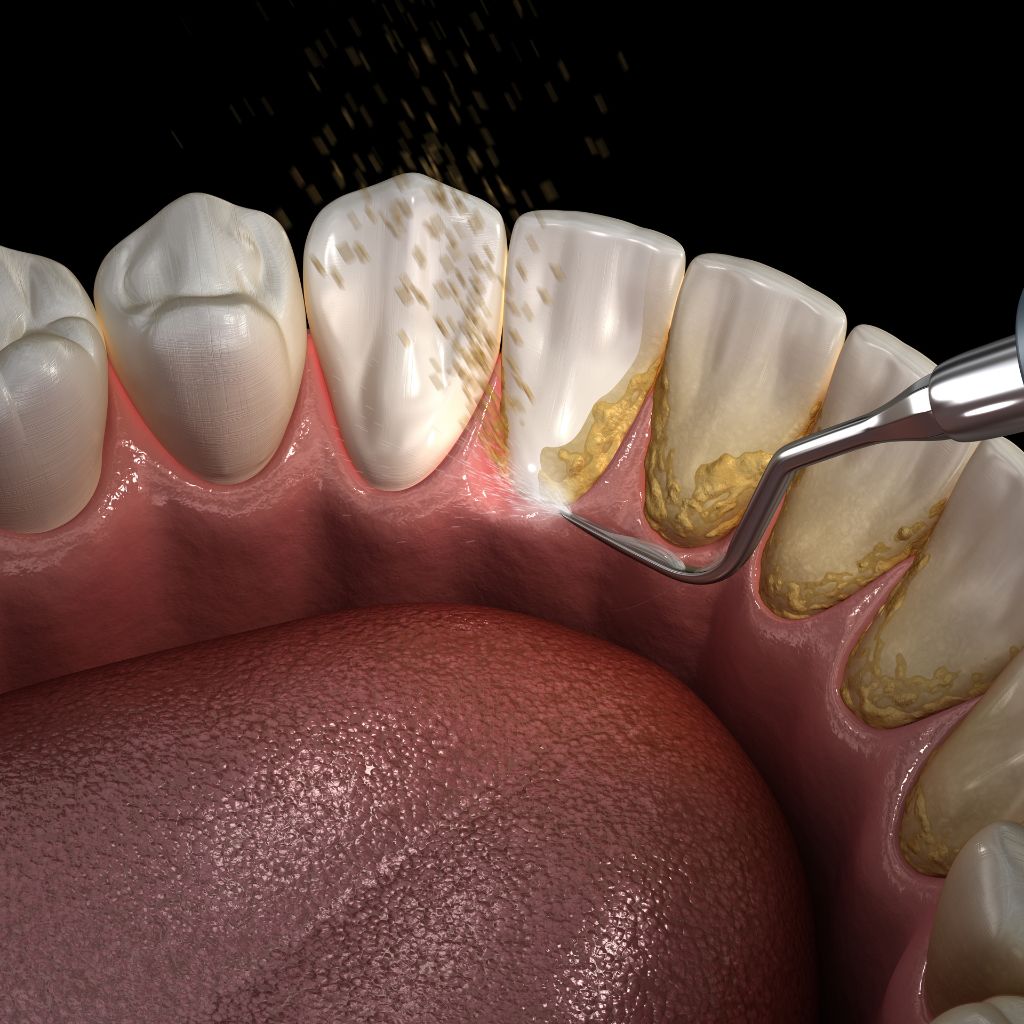
Deep cleaning treats early gum disease by removing harmful bacteria and buildup beneath the gumline — protecting your gums and the foundation of your smile.
A deep cleaning — also called scaling and root planing — treats early gum disease by removing plaque and tartar from below the gumline, where a routine cleaning can't reach. The surface of each tooth root is then smoothed so your gums can heal and reattach snugly around the tooth.
Unlike a routine cleaning, which maintains healthy gums, a deep cleaning is used to treat existing inflammation or infection — often identified by measuring the depth of the pockets between your teeth and gums.
With this bacteria removed, your gums have the chance to heal and tighten back around your teeth, helping protect the bone and roots that hold your smile in place.
Treating gum disease early protects the foundation that holds your entire smile in place.
Removes the bacteria beneath the gumline that routine brushing can't reach.
Stops advancing gum disease before it puts teeth and supporting bone at risk.
Local anesthetic keeps treatment comfortable while we clean thoroughly below the gumline.
Tap any step below to see what happens at that stage of your treatment.
We measure the depth of the pockets between your teeth and gums to assess your gum health.
Local anesthetic keeps the area comfortable throughout your treatment.
Plaque and tartar are carefully removed from below the gumline, where bacteria collects.
Tooth root surfaces are smoothed so your gums can heal and reattach snugly around each tooth.
When needed, an antibacterial rinse helps reduce any remaining bacteria beneath the gumline.
We'll monitor your healing and gum health at a follow-up visit to confirm everything is improving.
A regular cleaning maintains healthy gums that show no signs of disease. A deep cleaning treats gum disease that's already present, reaching further beneath the gumline to remove bacteria and buildup.
We use local anesthetic to keep the area comfortable throughout treatment. Some mild soreness or sensitivity afterward is normal and typically improves within a few days.
Treatment is often split into two visits, cleaning one half of the mouth at a time, followed by a check-up appointment to monitor healing.
Signs like bleeding or swollen gums, persistent bad breath, or gum recession can point to gum disease. We measure your gum pocket depths at your exam to determine if a deep cleaning is right for you.
Your gums need time to heal and reattach to your teeth. We'll schedule a follow-up to check your progress and typically recommend more frequent maintenance cleanings to keep gum disease from returning.
Gum disease only gets harder to treat the longer it's left alone. Schedule your visit and let's get your gums back on track.