
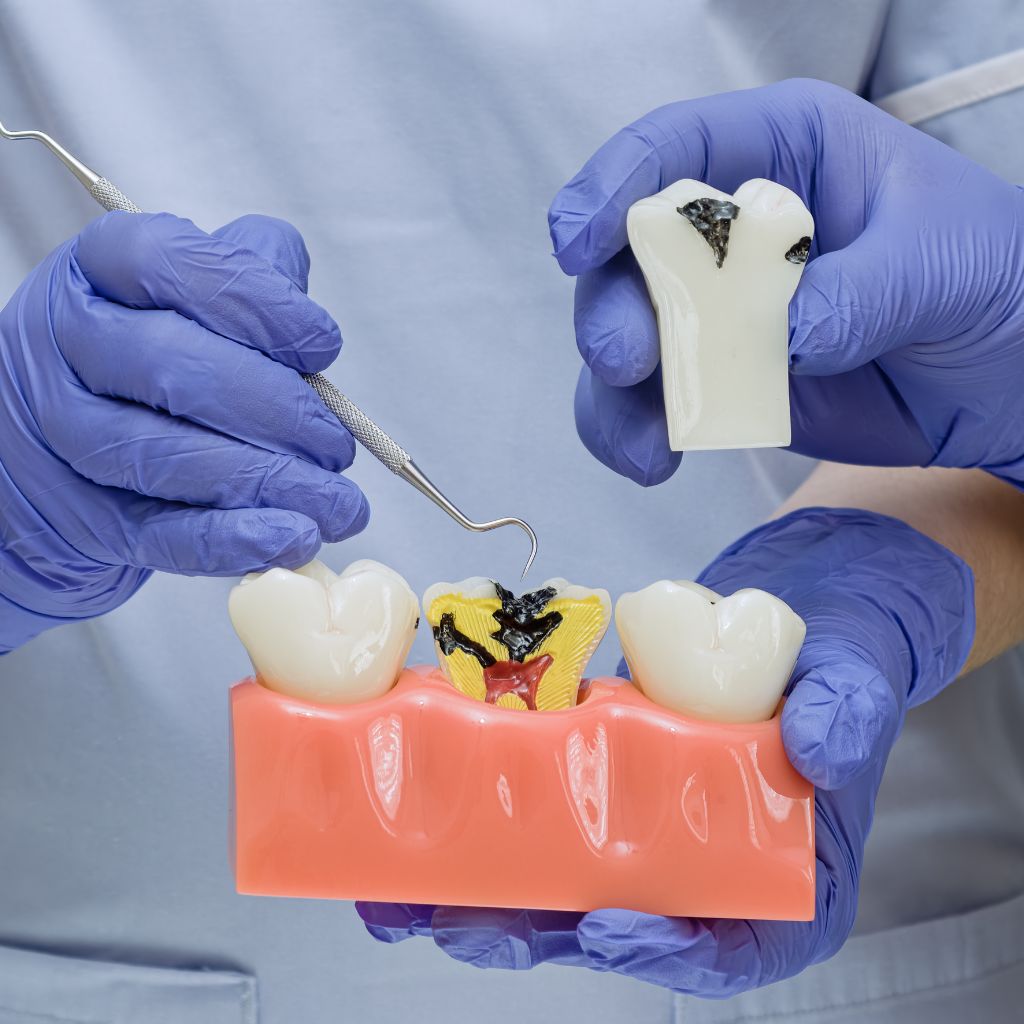
Safe, surgical removal of problematic wisdom teeth to relieve pain, prevent crowding, and protect your long-term oral health.
Wisdom teeth are the last molars to come in, usually in the late teens or early twenties — and often, there simply isn't enough room in the jaw for them to erupt properly. When they come in at an angle, get stuck below the gumline, or crowd neighboring teeth, they can cause pain, infection, or damage.
We use digital X-rays and panorex imaging to see exactly how your wisdom teeth are positioned before recommending removal, so you understand precisely what's happening and why.
The extraction itself is performed comfortably under local anesthesia, carefully removing the problematic tooth while protecting the surrounding teeth, gum, and bone.
Removing a problematic wisdom tooth protects the rest of your smile before it becomes a bigger issue.
Removes the source of discomfort caused by impacted or crowded wisdom teeth.
Protects neighboring teeth from shifting or being damaged by an erupting wisdom tooth.
Eliminates a common source of gum infection and future dental complications.
Tap any step below to see what happens at that stage of your treatment.
Panorex or digital X-ray imaging shows us exactly how your wisdom teeth are positioned.
We determine the best approach for your specific case and walk you through what to expect.
Local anesthetic keeps you comfortable throughout the procedure.
The problematic tooth is carefully and precisely removed, protecting surrounding teeth and bone.
You'll leave with clear guidance for a smooth, comfortable recovery at home.
We'll confirm your healing is progressing well and address any questions you have afterward.
Pain, swelling, jaw stiffness, or crowding near the back of your mouth are common signs. We use digital X-rays and panorex imaging to see exactly how your wisdom teeth are positioned and whether removal is recommended.
The area is fully numbed with local anesthetic before the procedure, so you shouldn't feel pain during the extraction itself. Some soreness and swelling afterward is normal and manageable with aftercare guidance we provide.
Most patients feel noticeably better within a few days, with full healing typically taking one to two weeks. We'll give you specific guidance based on your extraction.
In many cases, yes — but it depends on your specific situation, including how many teeth need removal and how they're positioned. We'll recommend the safest approach for you during your consultation.
Soft foods like soup, yogurt, mashed potatoes, and smoothies are ideal for the first few days. We'll go over exactly what to eat — and what to avoid — as part of your aftercare instructions.
The longer a problematic wisdom tooth is left untreated, the more it can affect the rest of your smile. Schedule your evaluation and let's get it resolved.